Vulnerability Management Definition and Process
Vulnerability management turns passive inventory into active risk reduction by prioritizing fixes based on exploitability rather than severity scores.
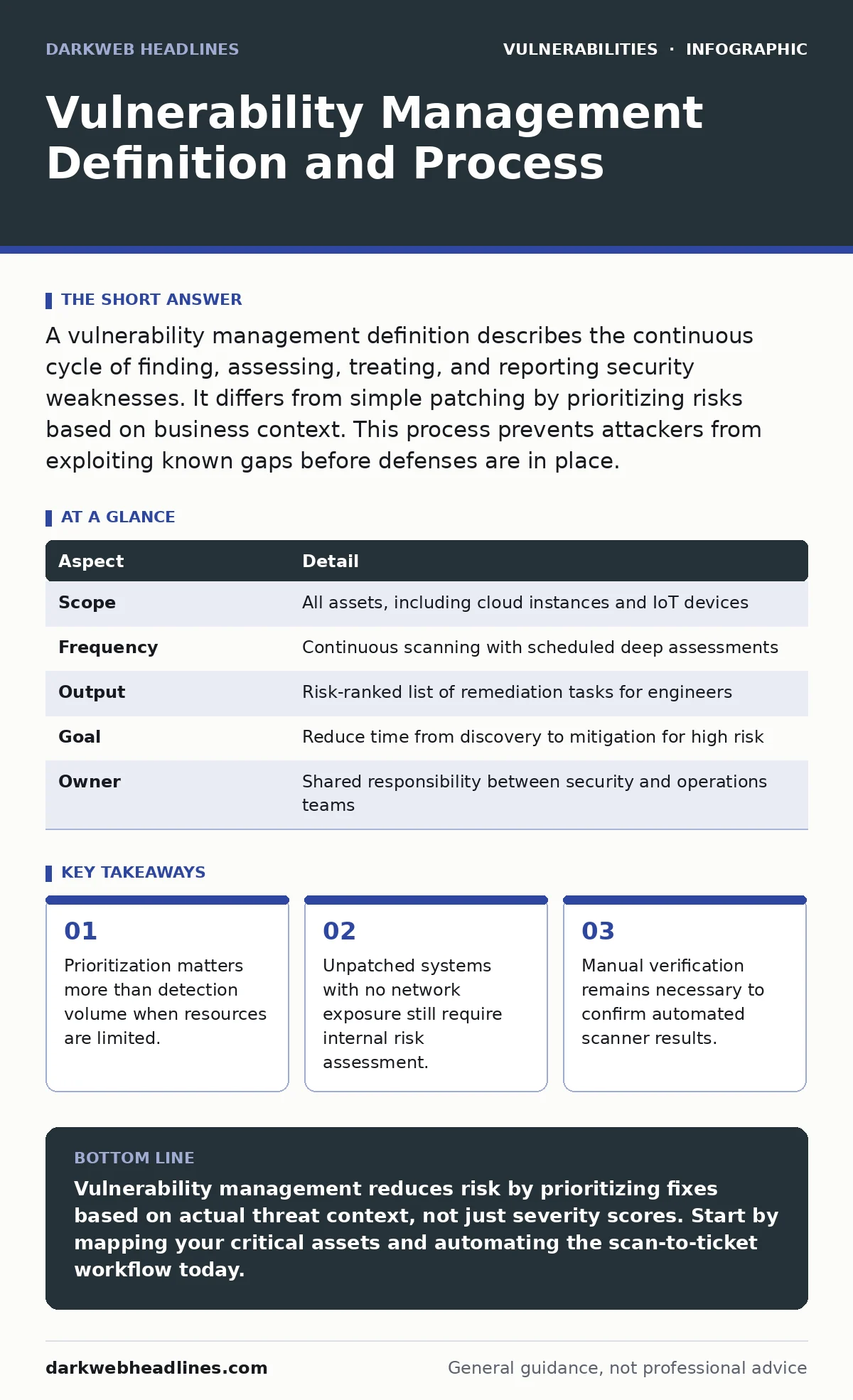
A vulnerability management definition describes the continuous cycle of finding, assessing, treating, and reporting security weaknesses. It differs from simple patching by prioritizing risks based on business context. This process prevents attackers from exploiting known gaps before defenses are in place.
Vulnerability Management Definition
A vulnerability management definition describes the continuous cycle of finding, assessing, treating, and reporting security weaknesses in your environment. It differs from simple patching by prioritizing risks based on business context and exploitability. This process prevents attackers from exploiting known gaps before defenses are in place. You cannot fix every flaw immediately. The core challenge is deciding which weaknesses pose the greatest threat to your specific operations. Prioritization drives the entire program. Without it, teams waste effort on low-risk issues while critical exposures remain open.
| Aspect | Detail |
|---|---|
| Scope | All assets, including cloud instances and IoT devices |
| Frequency | Continuous scanning with scheduled deep assessments |
| Output | Risk-ranked list of remediation tasks for engineers |
| Goal | Reduce time from discovery to mitigation for high risk |
| Owner | Shared responsibility between security and operations teams |
How the Cycle Works
The process begins with asset discovery. You cannot protect what you cannot see. Automated tools scan networks to identify running services and open ports. These tools compare findings against databases of known weaknesses. The next step is validation. Scanners often produce false positives. A human analyst confirms whether the vulnerability exists and whether it is exploitable in your configuration. After validation, you assess the risk. This involves looking at the asset's value and its exposure. Finally, you remediate the issue. This might mean applying a patch, changing a configuration, or adding a compensating control.
Who Affects the Program
Vulnerability management touches every team that touches infrastructure. Operations teams deploy patches and manage configurations. They bear the burden of downtime during maintenance windows. Development teams fix code-level weaknesses. They must integrate security checks into their build pipelines. Security analysts triage alerts and prioritize work. They translate technical findings into business risk. Executive leadership funds the program and sets the risk appetite. If executives ignore the output, the program fails. Everyone must understand their role in closing the gap.
What People Usually Get Wrong
Many organizations treat vulnerability management as a compliance checklist. They scan once a month and generate a report. This approach misses emerging threats and drifting configurations. Another common error is relying solely on severity scores. A low-severity flaw in a public-facing server may be more dangerous than a high-severity flaw on an isolated device. Teams also ignore compensation controls. Sometimes patching is impossible. In these cases, you must implement additional safeguards. Ignoring this reality leaves systems exposed.
Prioritization Beyond Severity
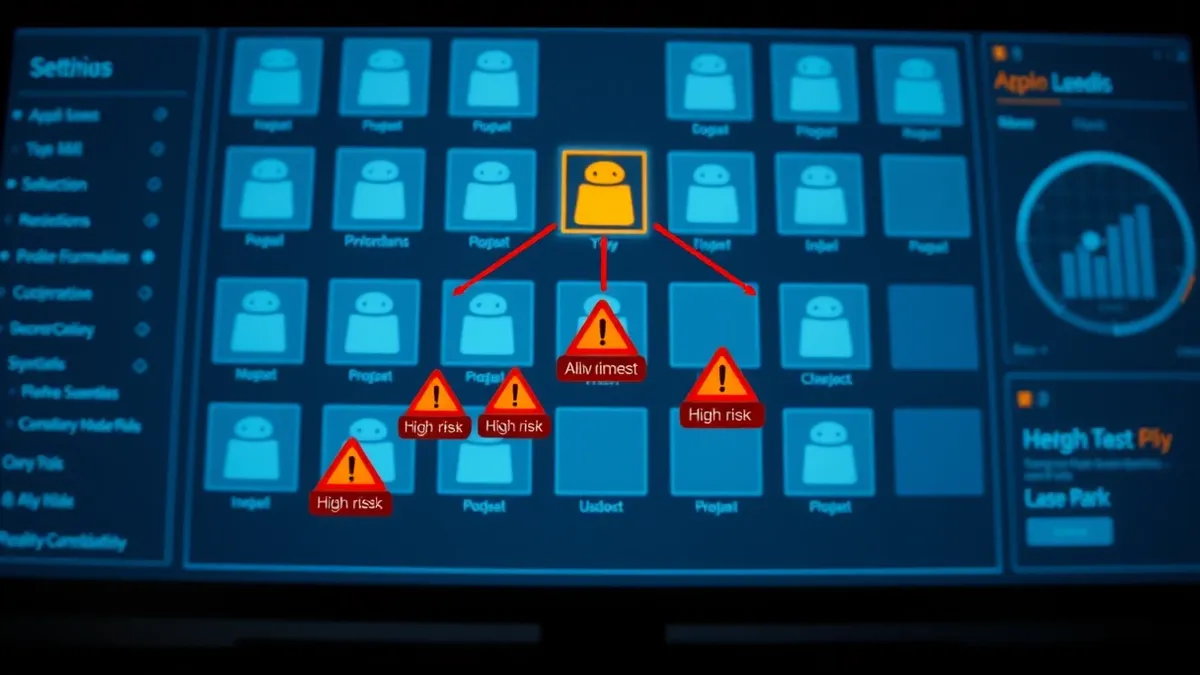
Severity scores help, but they do not tell the whole story. You must consider context. Is the asset internet-facing? Does it hold sensitive data? Is there a known exploit? Attack vectors in CVSS help quantify technical impact, but they ignore business value. A flaw in a legacy system with no data may rank high technically but low in business risk. Conversely, a minor configuration error in a payment gateway poses extreme risk. You must weigh technical severity against operational reality. This nuanced view prevents alert fatigue and focuses effort where it counts.
See also: CVE Monitoring Mistakes: 7 Errors That Blind Your Security Team · Cisco IOS XE Vulnerability Myths Debunked for Network Security
Integrating with Other Practices
Vulnerability management does not operate in a vacuum. It must connect with other security disciplines. For instance, dynamic application security testing (DAST) reveals runtime issues that static scans miss. You should correlate DAST findings with your vulnerability database. This creates a unified view of application risk. Similarly, understanding CWE weakness categories helps developers fix root causes rather than symptoms. If your team repeatedly encounters file upload vulnerabilities, you must address the underlying coding practices. Isolated fixes fail over time. Integration ensures consistency.
Handling Unpatchable Systems
Not every system can be patched immediately. Legacy applications may lack vendor support. Critical production systems may face downtime risks. In these cases, you must use compensating controls. Network segmentation isolates the vulnerable asset. Intrusion detection systems monitor for exploitation attempts. Application whitelisting prevents unauthorized execution. You must document these controls and review them regularly. The risk does not disappear; it shifts. You must ensure the shift is acceptable. Regular review prevents control decay.
Measuring Program Success
Metrics must reflect actual risk reduction, not just activity. Counting scanned assets tells you nothing about security posture. Instead, track the mean time to remediate high-risk vulnerabilities. This metric shows how quickly your team responds to serious threats. This shows coverage quality. Finally, monitor the number of vulnerabilities exploited in the wild. If this number rises, your prioritization model needs adjustment. Metrics should drive improvement, not just reporting.
Building a Sustainable Process
Sustainability requires automation and culture change. Automate scanning and reporting to reduce manual effort. Use APIs to integrate findings into ticketing systems. This ensures accountability and tracking. Cultivate a culture of shared responsibility. Security is not just the security team's job. Developers must write secure code. Operators must maintain secure configurations. Leadership must support the necessary resources. Regular training keeps skills sharp. Review processes quarterly to adapt to new threats. A static process becomes obsolete quickly. Continuous improvement is the only path to long-term resilience.
The Role of Proof Concepts
Understanding how attackers exploit weaknesses improves your defense. Proof-of-concept exploits demonstrate the practical impact of a vulnerability. They show whether a flaw is exploitable in your environment. This information helps you prioritize remediation. If no exploit exists, the risk is lower. If an exploit is widely available, the risk is higher. You must balance the need for speed with the need for accuracy. Rushing to patch without understanding the exploit can cause outages. Careful analysis prevents unnecessary disruption.
Final Steps for Implementation
Start by defining your asset inventory. You cannot manage what you do not know. Next, select scanning tools that fit your environment. Ensure they cover all asset types. Then, establish a prioritization framework. Involve business stakeholders in this process. Define clear roles and responsibilities. Automate where possible. Measure results and adjust. Vulnerability management is a journey, not a destination. Continuous effort yields continuous improvement. Stay focused on risk reduction. Ignore the noise. Protect your most valuable assets first.
Key takeaways
- Prioritization matters more than detection volume when resources are limited.
- Unpatched systems with no network exposure still require internal risk assessment.
- Manual verification remains necessary to confirm automated scanner results.
Vulnerability management reduces risk by prioritizing fixes based on actual threat context, not just severity scores. Start by mapping your critical assets and automating the scan-to-ticket workflow today.
Frequently asked questions
How is vulnerability management different from patch management?
Patch management is the technical act of applying updates. Vulnerability management is the strategic process of identifying, prioritizing, and deciding which patches to apply based on risk.
How often should I scan for vulnerabilities?
Scan continuously for critical assets. Weekly or monthly scans are acceptable for less critical systems. Frequency depends on your risk appetite and change velocity.
Do I need vulnerability management for air-gapped systems?
Yes. Air-gapped systems face insider threats and supply chain attacks. They still accumulate vulnerabilities over time. Isolation reduces risk but does not eliminate it.
What is the first step in building a program?
Create a complete asset inventory. You cannot prioritize or protect assets you have not identified. Map all devices, services, and applications.
How this guide was produced: written by the DarkWeb Headlines editorial team with AI assistance, checked against the public references listed below, and reviewed when the facts change. See our editorial policy or report an error.